
Mrs. Mercer placed the bag back down without acknowledging Ava, glanced at me, and walked away, muttering that Ava “wasn’t as bright as the other students.”
I watched her leave. I saw my daughter staring down at her table, hands pressed flat against the fabric she had spent two weeks making. And something inside me—something I’d carried for twenty years—finally refused to stay quiet.
Someone had just finished announcing the next event and set the microphone down. Before I could hesitate, I stepped forward and picked it up.
“I think everyone should hear this,” I said.
A few heads turned. Then more.
The room fell quiet. Behind me, Ava stood frozen. Across the room, Mrs. Mercer stopped.
“Because Mrs. Mercer,” I continued, “seems very concerned about standards.”
More people looked her way. She didn’t move.
“When I was 13,” I added, “this same teacher stood in front of a class and told me that girls like me would grow up to be ‘broke, bitter, and embarrassing.'”
A ripple spread through the crowd.
“And today, she said something very similar to my daughter.”
Heads turned—not just toward me, but toward Ava, her table, and the carefully made tote bags.
I walked back, picked one up, and held it up for everyone to see.
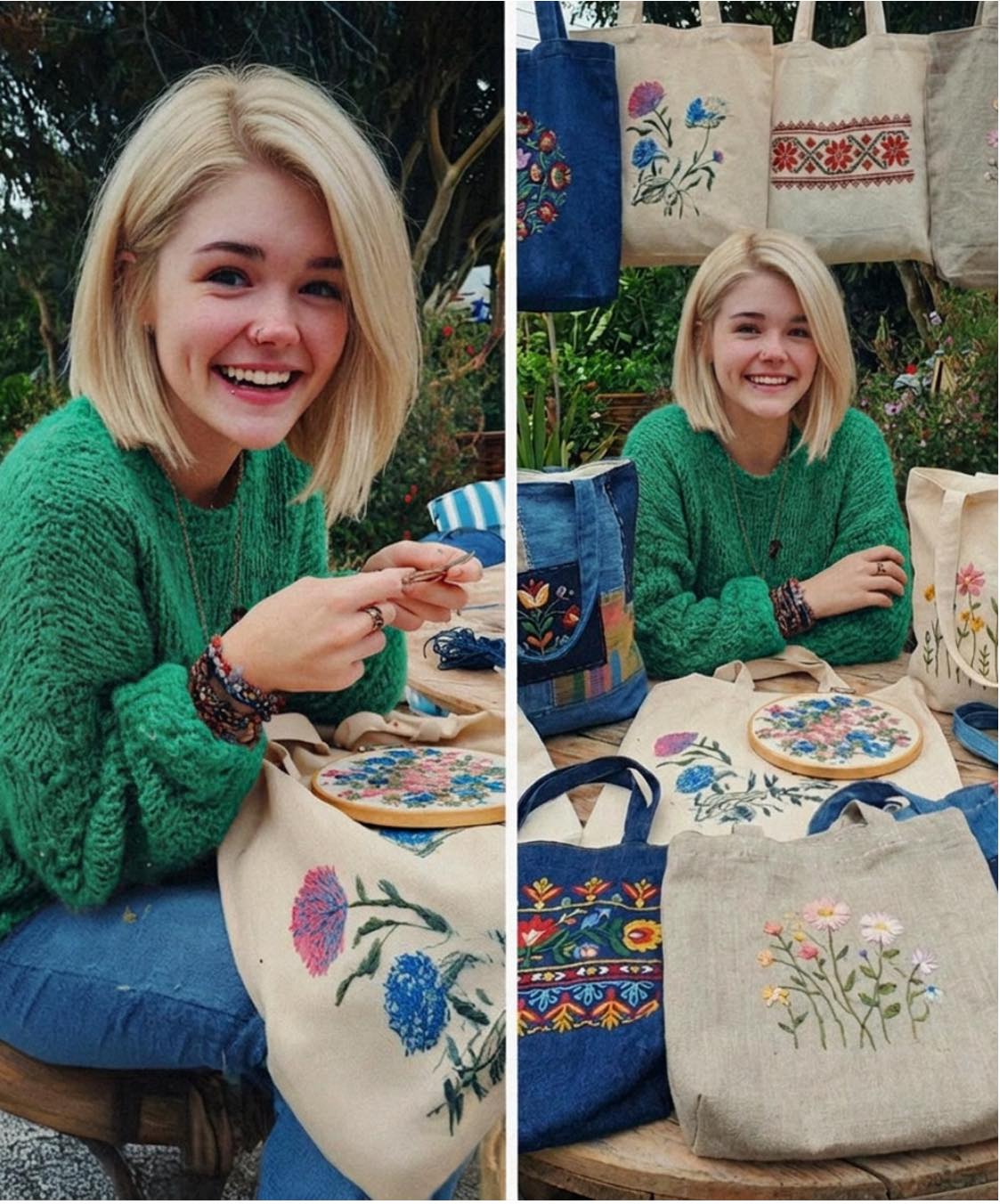
“This,” I said, “was made by a 14-year-old girl who stayed up every night for two weeks, using donated fabric, so families she’s never met could have something useful this winter.”
The room was silent. Even the popcorn machine could be heard.
“She didn’t do it for praise,” I continued. “She didn’t do it for a grade. She did it because she wanted to help.”
Have you ever seen a room realize they’re on the wrong side of something—and choose to fix it? That’s what happened.
Parents straightened. People glanced at Mrs. Mercer.
Then I asked, “How many of you have heard Mrs. Mercer speak to students that way?”
For a moment, silence.
Then one hand rose. A student at the back. Then a parent. Then another. Then several more, one after another.
Mrs. Mercer stepped forward. “This is completely inappropriate…”
But a woman near the front turned and said calmly, “No. What’s inappropriate is what you said to that girl.”
Another parent added, “She told my son he wouldn’t make it past high school. He was 12.”
A student said, “She told me I wasn’t worth the effort.”
It wasn’t chaos. Just people, one by one, deciding to stop staying silent.
And in that moment, it wasn’t just my story anymore. It belonged to everyone. And Mrs. Mercer couldn’t take back control.
“I’m not here to argue,” I said. “I just want the truth to be heard.”
Then I looked straight at her.
“You don’t get to stand in front of children and decide who they become.”
Sweat gathered at her temples.
But I wasn’t finished.