
"No te pediré que dejes de buscar", dijo. "Pero danos cuarenta y ocho horas antes de que vayas a Portland. Hablemos primero con Marisol."
"¿Crees que la encontrarás?"
"Creo que ha estado cambiando de albergue y trabajos temporales. Las personas en esa situación suelen dejar rastros sin darse cuenta."
"Y si tiene la pulsera de Nana, sabe algo."
"Sí."
Esa sola palabra devolvió un pequeño pedazo de esperanza.
Asentí.
"Cuarenta y ocho horas."
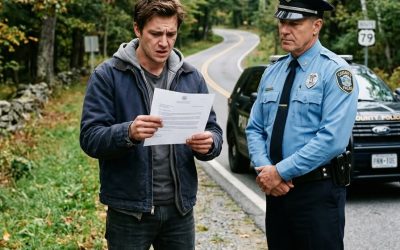
El detective Collins se puso en pie.
Antes de irse, me permitió fotografiar la carta de Nana.
Me quedé mirando la imagen en mi móvil mucho después de que los agentes se fueran.
Por favor, que sepas que no me fui por tu culpa.
Durante diez años, necesité esas palabras.
Ahora que los tenía, dolían casi tanto como el silencio.
Esa noche, las noticias emitieron imágenes de Felix siendo llevado al juzgado.
Tenía las manos esposadas.
Su traje le quedaba mal.
Los periodistas gritaban preguntas.
"¿Amenazaste a tu hija?"
"¿Sabes dónde está Savannah Harrison?"
"¿Has destruido pruebas?"
Felix miraba fijamente al frente.
Entonces un periodista llamó mi nombre.
"¿Le mentiste a Natalie Harrison durante diez años?"
Felix dejó de andar.
Por un segundo, miró hacia las cámaras.
Su rostro cambió.
No me gusta arrepentirse.
Hacia el miedo.
El clip se reprodujo tres veces.
Me di cuenta de lo mismo cada vez.
No le tenía miedo a la cárcel.
Temía lo que más pudiera encontrar la policía.
Llamé al detective Collins inmediatamente.
"Felix sabe más."
Guardó silencio un momento.
"¿Por qué dices eso?"
"Conozco su cara."
"Señora Harrison—"
"Parecía aterrorizado cuando me preguntaron si me había mentido."
"Ahora mismo tiene muchas razones para estar asustado."
"No. Esto era diferente."
"¿Qué crees que está ocultando?"
"No lo sé."
Entonces recordé algo.
Un momento tan pequeño que lo había ignorado durante años.
Tres días después de que Nana desapareciera, Felix había llegado tarde a casa.
Sus zapatos estaban embarrados.
No barro de ciudad.
Arcilla roja.
Le pregunté dónde había estado.
Dijo que había buscado cerca del río.
Pero las orillas del río cerca de nosotros eran tierra oscura, casi negra.
La arcilla roja venía de más al sur.
Cerca del antiguo camino de la cantera.
Se me secó la boca.
"Detective."
"¿Sí?"
"Registraste su trastero."
"Correcto."
"¿Registraste la vieja cantera?"
Hubo una pausa.
"No."
"Felix volvió a casa con arcilla roja en los zapatos tres días después de que desapareciera la abuela."
"¿Estás seguro?"
"Los lavé yo mismo."
"¿Por qué no estaba esto en tu declaración original?"
"Porque le creí cuando dijo que había estado buscando."
La voz de Collins se agudizó.
"¿Qué presa?"
"Westbridge. Fuera de la Ruta 9."
Colgó la llamada menos de un minuto después.
La policía registró la cantera durante toda la noche.
Al amanecer, el detective Collins volvió a llamar.
My hands shook so badly that Claire had to take the phone and place it on speaker.
“We found a vehicle,” Collins said.
I couldn’t speak.
“What kind?” Claire asked.
“An older blue sedan registered to Carla Wynn.”
Felix’s mistress.
The car had been hidden beneath a collapsed wooden structure at the edge of the property.
Its plates had been removed.
The interior had been stripped.
But inside the trunk, investigators found something that belonged to Nana.
Her shoulder bag.
The same brown leather bag she carried out of our kitchen the morning she vanished.
I pressed both hands over my mouth.
Claire began crying beside me.
“Was she in the car?” I forced myself to ask.
“No.”
“Was there blood?”
“We found no visible signs of violence.”
Relief and terror collided inside me.
“Then why was her bag there?”
“We don’t know yet.”
“What else did you find?”
“A bus schedule.”
“To Portland?”
“Yes.”
“And a photograph.”
My breathing slowed.
“Of what?”
Collins hesitated.
“Of you.”
I closed my eyes.
Nana had carried my photograph with her.
Even while running.
Even while terrified.
She had taken a piece of me.
“There’s more,” Collins said.
I opened my eyes.
“What?”
“We located Marisol.”
My entire body went rigid.
“Where?”
“At a shelter outside Sacramento.”
“Did she talk?”
“She agreed to an interview.”
“And the bracelet?”
Collins took a breath.
“She says a woman gave it to her three weeks ago.”
The room seemed to shrink around me.
“What woman?”
“She didn’t know her real name.”
“Describe her.”
“Mid-thirties to early forties. Tall. Pale eyes. Thick curly hair.”
Tears filled my eyes before Collins finished.
“Marisol said the woman asked her to sell the bracelet somewhere public.”
“Why?”
“She said, ‘Her mother will recognize it.’”
I began to sob.
Not quietly.
Not carefully.
The sound tore out of me after ten years of being trapped inside.
Claire held me as my knees gave way.
Detective Collins kept speaking through the phone.
“Mrs. Harrison, we believe Savannah may be alive.”
May be.
Two tiny words.
But they were enough.
For the first time in ten years, hope no longer felt like a ghost.
It felt like a trail.
And somewhere at the end of it, my daughter was waiting to be found.