

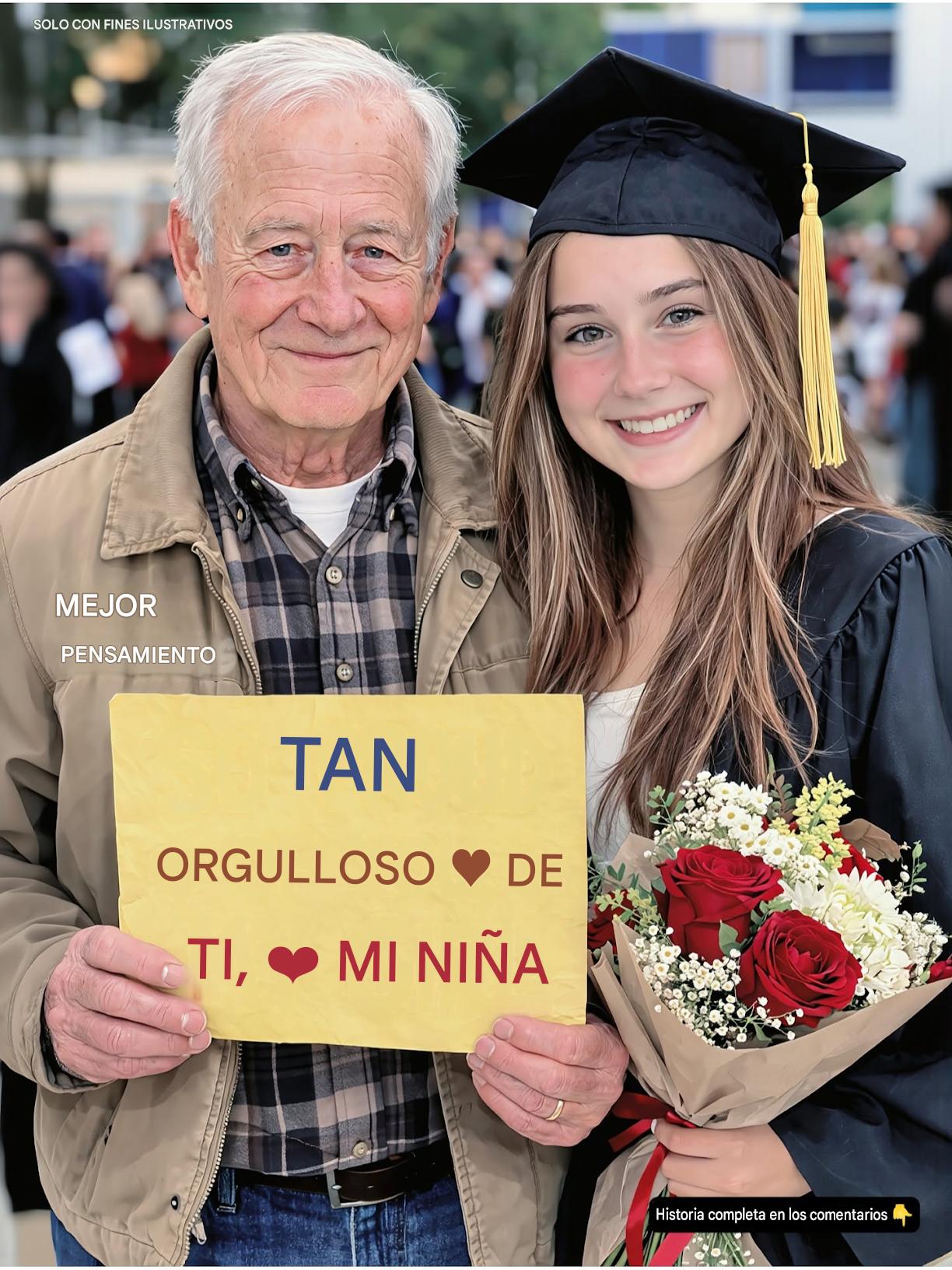
En los eventos escolares, Arthur siempre llevaba lo mismo: mocasines marrones pulidos tantas veces que el cuero se había agrietado, camisas de cuadros que nunca se metían del todo dentro y una vieja chaqueta beige que olía levemente a aftershave y detergente para la ropa.
Se movía despacio, como si no supiera dónde debía situarse.
Kids noticed.
Kids always notice.
One afternoon in third grade, a boy leaned over during recess and asked casually, “Is that your great-grandpa who picks you up?”
I laughed like it was a joke.
“Yeah, something like that.”
But the question stuck with me longer than I wanted to admit.
As I got older, the embarrassment grew.
By middle school, I avoided letting him come to school events whenever I could.
“Don’t worry about it,” I’d say. “It’s not important.”
But he always showed up anyway.
Quietly.
Standing at the back of the room.
Clapping a little too slowly after the performances.
High school was when things got worse.
That’s when resentment started to grow inside me—sharp, irrational, but powerful.
It came out during arguments.
And we argued a lot.
Mostly about small things.
Curfews. Grades. My attitude.
But underneath every fight was something deeper that neither of us said out loud.
Until one night, I finally did.
I was sixteen.
We had just finished arguing about college applications.