
“¿De dónde?”
“Ningún lugar que valga la pena contar.”
She nodded and slid a tin of shortbread toward me.
Every Sunday after that, I returned.
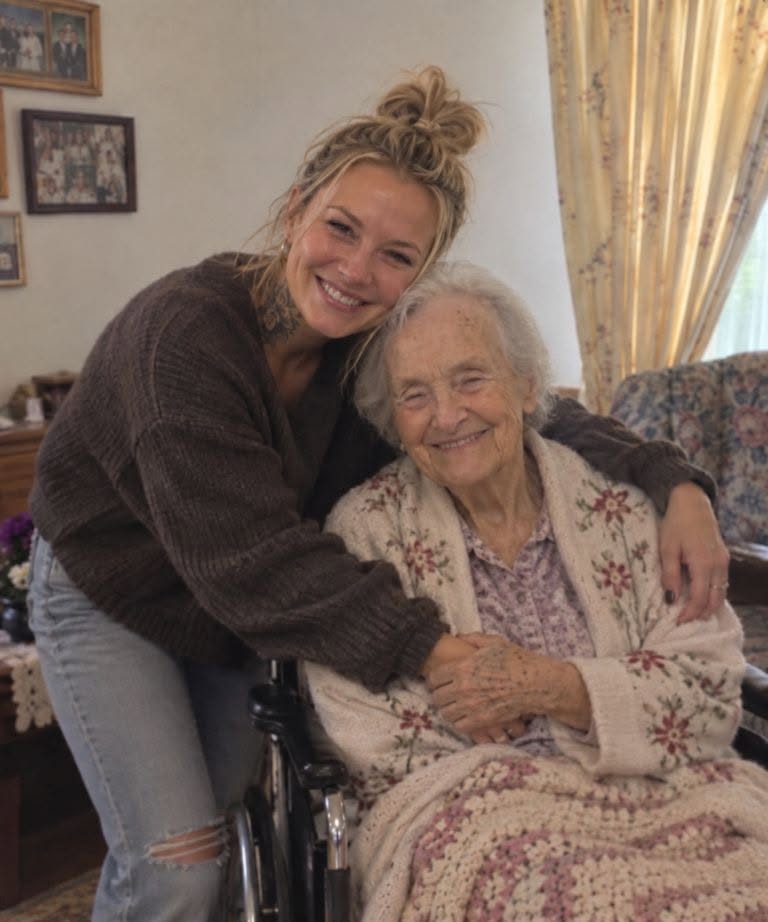
Marianne had worked as a seamstress and designer and once owned her own store. She told me about gowns she’d made for senators’ wives and silk imported from Lyon. I listened and usually left with containers of soup tucked into my bag.
Soon, she began noticing things no one else ever had.
“There’s a button missing on your coat,” she said one afternoon, opening her sewing tin and taking out a needle.
“It’s fine.”
“Give it here.”
I handed her the coat. She sewed quietly, then noticed the small burn on my wrist.
“How’d you get that?”
“A fryer at work. It’s nothing.”
“It is not nothing.” She tied off the thread. “You flinch every time someone says the word mother. Did you know that? You’ve had a hard life, haven’t you, sweetheart?”
I couldn’t answer.
That was when our relationship changed.
By the eighth Sunday, I stopped counting the hours.
By the twelfth, I tried pushing her money back across the table.
“Keep it,” she said. “We have a deal.”
“Marianne.”
“Hush.”
One day, she slid her old tin sewing box toward me. Its lid was dented, and the painted roses had faded.
“You think I’ve lost my mind,” she said. “But one day, this box will save you.”
“Save me from what?”
“You’ll find out when it matters,” she replied.
I held the box on my lap during the entire bus ride home, and for the first time in my life, I let myself cry without checking who might see.
I left her house feeling truly loved for the first time, unaware it would be the last time I ever saw her alive.
The following Sunday, I stayed at work longer than planned, smiling through a customer slowly counting coins.
I wanted to bring Marianne fresh bread from the bakery near the bus stop. I called to say I was running late, but a man answered.
“Who is this?” he barked.
I froze. “I’m a friend of Marianne’s. I visit every Sunday. Who are you?”
“I was trying to reach Marianne. Is she alright?”
A bitter laugh came through the phone. “I’m her nephew, Arthur, and you’re the little con artist who fooled my aunt. Congratulations. She’s dead.”
The bread bag slipped from my fingers. “What did you just say?”
“You heard me. Two nights ago. And before you start crying crocodile tears, let me save you the trouble. She left you absolutely nothing.”
“I don’t want anything,” I whispered. “I just want to know what happened.”
La línea se cortó.
Apenas recuerdo caminar a casa. Recuerdo cerrar la puerta, mis rodillas golpeando el suelo de la cocina y el pequeño sonido que se me escapó de la garganta al darme cuenta de que nunca volvería a sentarme en la mesa de Marianne.
Nunca le había dicho cuánto significaba para mí. Ahora nunca tendría la oportunidad.
Me arrastré hacia la caja de costura de hojalata que había dejado en el suelo esa mañana, demasiado cansada para guardarla. Me temblaban las manos al ponerla en mi regazo.
“Lo siento”, le dije a la caja, porque no quedaba nadie más a quien contárselo. “Debería haberlo dicho. Debería haberlo dicho cien veces.”
El metal frío presionaba contra mi pecho mientras me inclinaba hacia adelante, apoyando la frente en la tapa.
Entonces mi pulgar se enganchó con algo debajo.
Había una pequeña cresta a lo largo del borde inferior, apenas más grande que una uña. Había manipulado la caja muchas veces y nunca me había dado cuenta.
Lo pulsé.