
“Los bebés nacen en ese hospital todos los días. Podría haber cientos de niños con expedientes similares.”
“Lo sé.”
“¿Entonces por qué me enseñas esto?”
Las lágrimas llenaron sus ojos.
“Porque hay algo más.”
Sacó otro documento.
Lo miré sin moverme.
Entonces Nora explicó.
“Cuando la agencia vio las fechas y la información del hospital, la trabajadora social sugirió investigar si Ellie podría tener una conexión biológica con alguien de nuestra familia.”
Sentí frío.
“¿Qué quieres decir?”
“¿Recuerdas la semana pasada, cuando aceptaste hacer un hisopo de mejilla?”
Asentí despacio.
Nora me había dicho que la agencia quería información médica familiar adicional porque los registros sugerían una posible relación biológica.
En aquel momento, nadie podía decirnos si esa conexión sería cercana o lejana.
Acepté porque quería que Ellie tuviera historiales médicos precisos.
Nunca esperé algo así.
“Han completado una comparación preliminar”, susurró Nora.
Deslizó el informe hacia mí.
I looked down.
My name was printed near the top.
Below it was Ellie’s.
Then came the conclusion.
The genetic findings suggested a biological parent-child relationship.
I read the words once.
Then again.
My mind refused to accept them.
“That can’t be right.”
Nora covered her mouth.
“Claire…”
“My daughter died.”
“I know what they told you.”
“I have her death certificate.”
Tears began running down Nora’s face.
“I know.”
I stood so quickly that my chair scraped against the floor.
“No. There has to be a mistake.”
I walked to the kitchen sink and gripped the edge of the counter.
Outside, someone was walking a dog.
A delivery truck stopped across the street.
The neighborhood looked exactly as it always did.
Yet everything inside my world had changed.
I turned back toward my sister.
“Are you saying Ellie might be Lucy?”
Nora nodded through her tears.
“I think it’s possible.”
My knees felt weak.
For five years, I’d lived with the knowledge that my baby was gone.
I’d visited her grave.
Kept her bracelet.
Remembered her birthday.
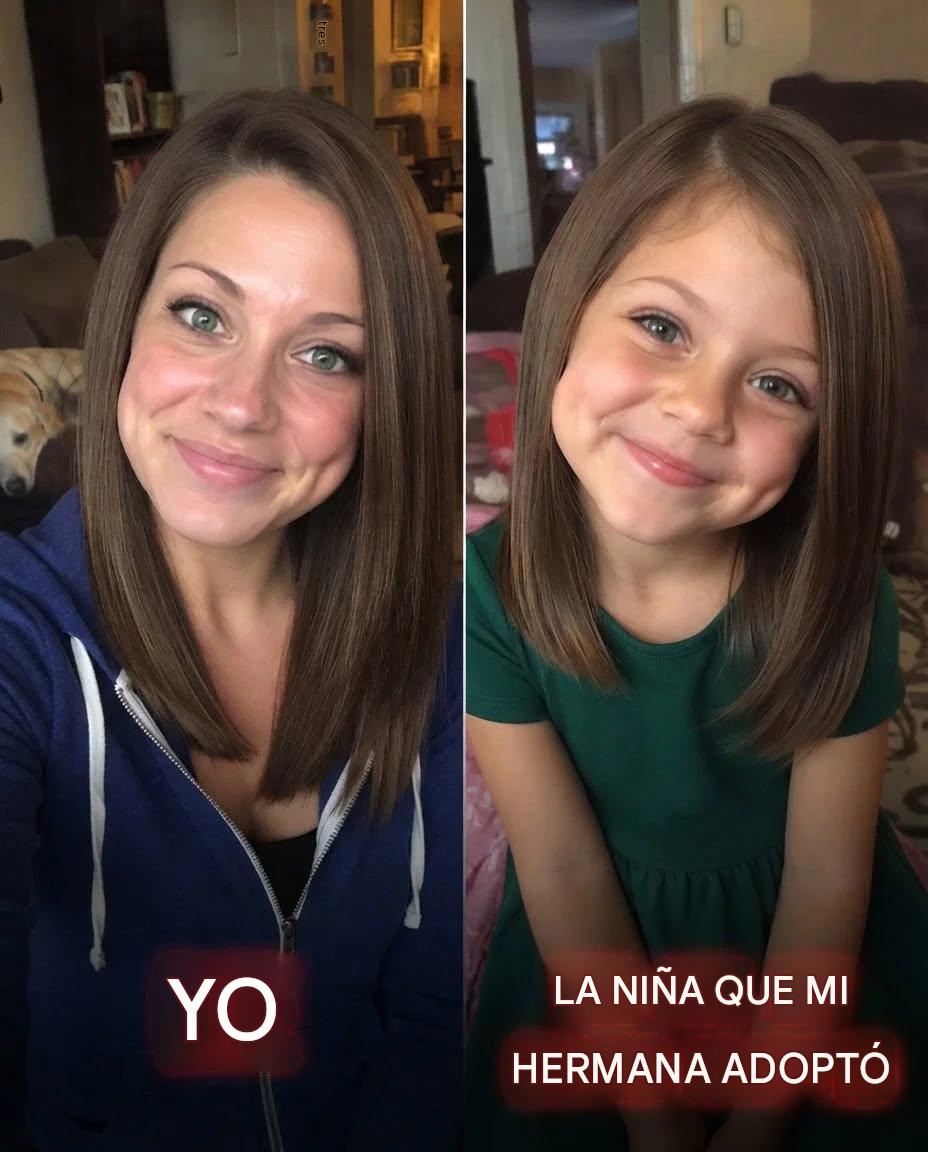
And now my sister was telling me that the little girl I’d been brushing hair for might be the daughter I’d lost.
“Does Ellie know?” I asked.
“No.”
“Does Tom?”
“Yes. We agreed not to tell Ellie anything until we have confirmation.”
I looked at the report again.
“Are these results certain?”
Nora shook her head.
“They’re preliminary. They want another independent test and a complete review of the hospital records.”
I exhaled shakily.
“Then we don’t know for sure.”
“No,” she admitted. “Not yet.”
I looked at her.
“How could this happen?”
“We don’t know.”
“Who told the adoption agency that her parents couldn’t be identified?”
“That’s being investigated.”
“And who told me Lucy had died?”
Nora had no answer.
The room seemed to spin.
I wanted to believe the report.
More than anything in the world.
But I was terrified.
Because if it was wrong, I would have to lose my daughter all over again.
Then Nora asked something I hadn’t expected.
“Claire… do you hate me?”
I stared at her.
“What?”
“If Ellie really is Lucy…”
Her voice broke.
“I brought her home. I adopted her.”
I slowly returned to my chair.
“Nora, you didn’t know.”
“But she’s your daughter.”
“You gave a little girl a loving home when she needed one.”
Nora began crying harder.
“I love her so much.”
“I know.”
“And I’m terrified of losing her.”
I looked down at the papers between us.
I couldn’t promise that nothing would change.
Something already had.
But I also couldn’t blame my sister for a mistake neither of us understood.
“Leave the documents with me,” I said quietly.
She nodded.
Before leaving, Nora hugged me.
“Whatever happens, Claire, I love Ellie.”
I held her for a moment.
“I know you do.”
That evening, I opened the drawer beside my bed.
Inside was the small keepsake box I’d guarded for five years.
I lifted the lid.
Lucy’s hospital bracelet lay exactly where I’d left it.
The plastic had yellowed slightly.
But her name was still clearly visible.
I carried it into the kitchen and placed it beside the genetic report.
Two pieces of evidence.
Dos historias completamente diferentes.
Uno decía que mi hija había muerto poco después de nacer.
El otro sugirió que podría estar viva.
Me quedé allí sentado durante horas.
Todos los recuerdos del hospital regresaron.
Las enfermeras.
La expresión del doctor.
La manita se movía junto a la cara de Lucy.
El momento en que alguien me dijo que no había sobrevivido.
¿Había habido un error?
¿Alguien la había confundido con otro bebé?
¿Había pasado mi hija cinco años creciendo sin saber que existía?
No podía dejar de hacer preguntas.
Pero no tenía respuestas.
En los días siguientes, Nora, Tom y yo empezamos a trabajar con profesionales de adopción y un abogado para entender lo que había pasado.
Solicitamos una revisión completa de los registros hospitalarios.
Se organizó una prueba genética independiente con el consentimiento adecuado.
También pedimos documentos relacionados con la primera colocación de Ellie en cuidados protectores.
Nuestro abogado nos advirtió que, incluso si se confirmaba la relación genética, no resolvería automáticamente las cuestiones legales relacionadas con la adopción de Ellie.